

Where Can Carrara Marble Be Used?
Carrara Marble can be used in every part of home design from kitchen countertops to foyer floors and baths of all sizes and use. Carrara Marble is also used for staircases for a grand spectacular foyer as well as for a step down great room. In certain style homes Carrara Marble is used for wall cladding to give a more dramatic look. In other more traditional homes Carrara Marble is available in columns which separate a foyer entrance to an arched great room or family room. Carrara Marble is widely available in decorative base and cap mouldings which lend itself to a traditional wainscoting look for true elegance and style. I larger homes with multiple baths Carrara Marble is very versatileas it can be used repeatedly without looking the same. For example, Carrara Marble can be used by itself with multiple sizes and mosaics. Colors that coordinate and look rich with Carrara Marble are Bardiglio, Bianco Dolomite, Dark Emperador and Crema Marfil to name just a few. Carrara Marble also pairs well with glass tile, metal tiles and even more decorative ceramic tiles. Carrara Marble is a great place to start and add on as taste commands.
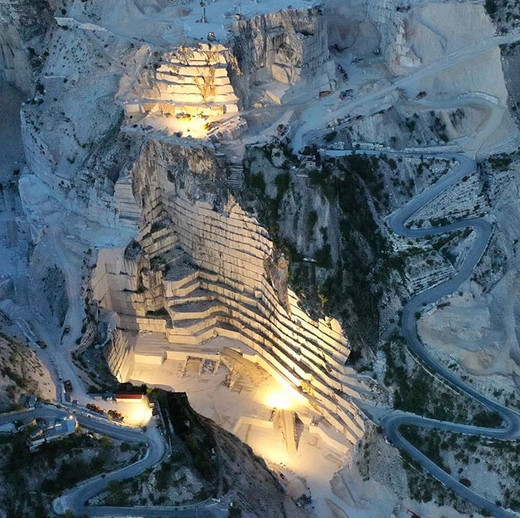
What is Carrara marble?
Carrara marble is a type of white -grey marble popular for use in all types of building decor. It has been used for centuries all throughout Europe in the finest of buildings, palaces and homes alike. With innovation and technology availability to Carrara Marble is within everyone’s reach. It is important to note that while many retailers sell Carrara Marble, there are different grades and different quality. It is important to not just be price driven when making a Carrara Marble purchase. To better understand what Carrara Marble is lets delve into some history and geological information. Carrara Marble is found and quarried in only one place in the world and that is city of Carrara in the province of Massa and Carrara in Lunigiana. The Lunigiana is a historical territory of Italy, which in current day is located in the provinces of La Spezia and Massa Carrara. Its borders originate from the ancient Roman settlement, later the medieval diocese of Luni, no longer in existence. This is the northernmost tip of what is referred to as modern-day Tuscany, Italy.